Silk Dupioni Fabric: The Textured Silk Making a 2026 Couture Comeback
Silk dupioni fabric is the textured, crisp silk woven from the irregular threads of double cocoons, giving it a raised, slubbed surface, a subtle lustre and a structure that holds shape like almost no other silk. For brands, ateliers and wholesale buyers, silk dupioni fabric is the choice when a design needs character and volume rather than fluid drape. This 2026 guide explains what makes dupioni unique and how to source it. Browse the full silk fabric collection for coordinating qualities.
What Is Silk Dupioni Fabric?
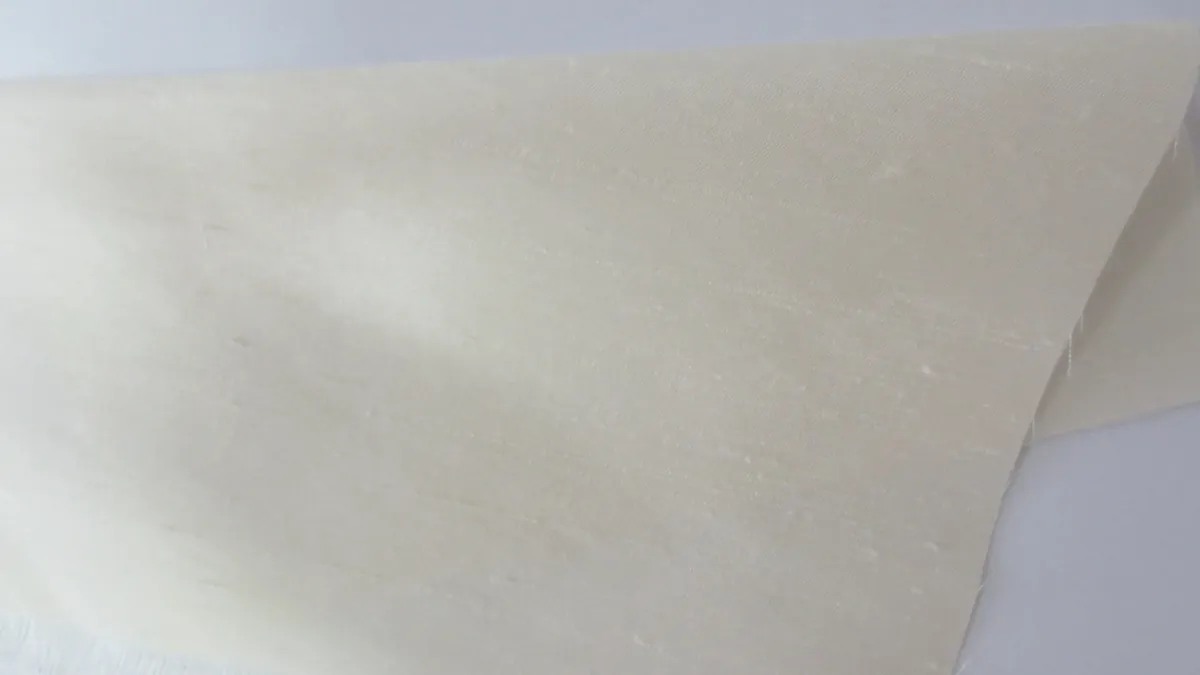
Silk dupioni is a plain-weave silk made from threads spun from two silkworms that nested together in one cocoon. That shared cocoon yields an uneven, irregular yarn, and when woven the cloth shows raised, irregular slubs running across the weave. The face is matte with a subtle lustre, and the hand is crisp rather than fluid. You will also see the spelling "dupion" and the related term "shantung"; they describe the same family of double-cocoon silk, with shantung typically carrying slightly finer, less pronounced slubs.
Dupioni is a real, usually 100% mulberry silk. Commercial weights commonly run from about 19 momme to 40 momme, where one momme equals roughly 4.34 grams per square meter, so a 25 momme dupioni weighs around 108 g/m². That density is why it holds a structured line; unlike a floaty silk chiffon or silk georgette.
Why Designers Are Returning to Dupioni in 2026
The 2026 couture and occasion-wear mood is leaning into texture and honest materials. Silk dupioni fabric answers that shift with a cloth that looks and feels hand-made, light playing across its slubs. Designers use it for wedding gowns, bridesmaid dresses and structured eveningwear with an artisanal character.
There is also a sustainability story in the irregularity: dupioni uses cocoons that cannot be reeled into a single smooth filament, so it is a natural by-product of sericulture. The crisp hand and rich, saturated solid dyes make dupioni a dependable, distinctive option for occasion-wear and home lines.
Slubs: a Feature, Not a Flaw
The lumps in dupioni, called slubs, are where two silkworms spun a shared cocoon, producing a thicker section of yarn. They are the defining feature of the cloth, not a defect, creating a play of light and shadow that gives dupioni its depth. Every roll varies slightly, and the slub pattern is unique.
Buyers new to dupioni sometimes mistake the slubs for flaws. When you review swatches, look for a balanced, attractive distribution of slubs, then embrace the variation; a "uniform, slub-free dupioni" is a contradiction, because the texture is the product.
Silk Dupioni Weights at a Glance
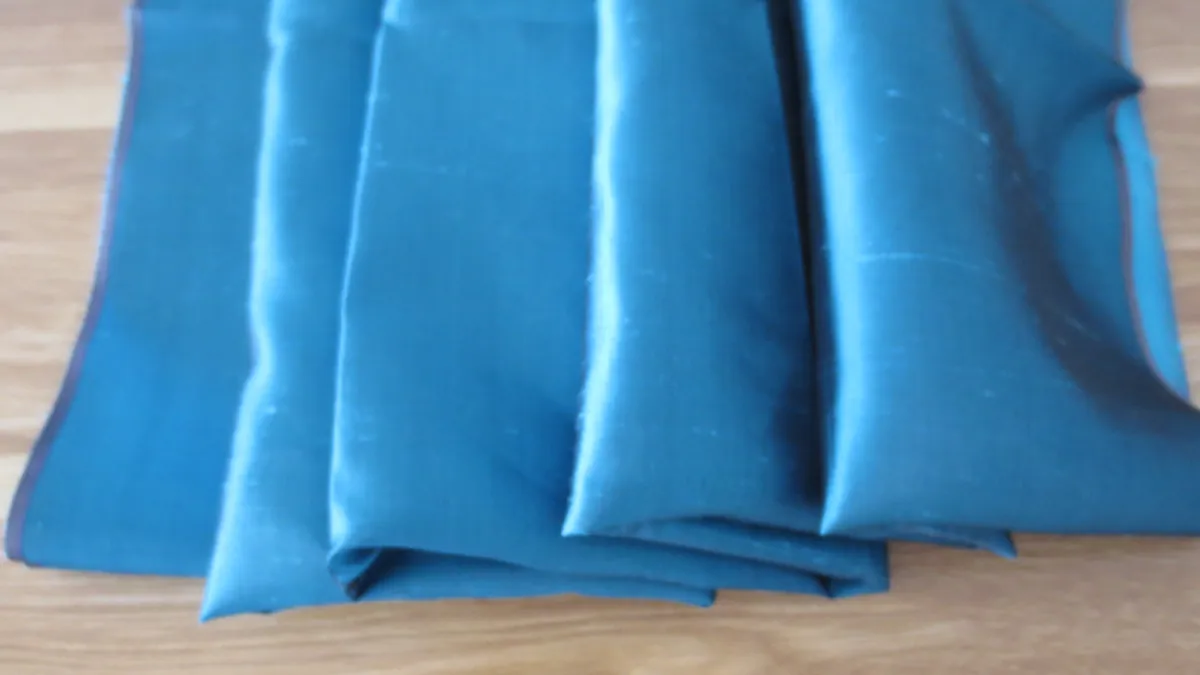
Dupioni spans a wide weight range, from dress-weight cloth to furnishing-weight. Use the table to match momme to your end use.
| Momme | Approx. g/m² | Character | Best uses |
|---|---|---|---|
| 19 mm | ~82 g | Light, crisp | Blouses, linings, light dresses |
| 22 mm | ~95 g | Medium crisp | Dresses, skirts, jackets |
| 25 mm | ~108 g | Structured | Wedding gowns, suiting, overlays |
| 30 mm | ~130 g | Firm | Structured gowns, corsetry, décor |
| 40 mm | ~174 g | Heavy, firm | Curtains, cushions, upholstery |
For most apparel, 22–30 momme covers dresses through structured gowns; reserve 19 momme for lighter pieces and 40 momme for home décor where weight is an advantage.
Dupioni vs Taffeta and Organza
The key differences among these crisp silks are surface and sheen: taffeta is smooth and uniformly rustling with a high sheen; organza is sheer and crisp; dupioni is textured and matte with slubs. The table summarises the choice.
| Weave | Structure | Sheen | Weight | Best use |
|---|---|---|---|---|
| Dupioni | Crisp, textured | Matte, subtle lustre | Medium–heavy | Structured dresses, suiting, décor |
| Taffeta | Crisp, smooth | High sheen | Medium | Sculptural gowns, corsetry, ribbons |
| Organza | Crisp, sheer | Flat sheen | Light | Veils, puff sleeves, overskirts |
Choose silk taffeta when you want a smooth, sculptural, high-shine gown; choose organza for sheer volume; choose dupioni when texture and an artisanal, matte character are the point.
Best Applications for Silk Dupioni Fabric
Dupioni's structure makes it versatile across apparel and interiors:
- Wedding gowns and bridesmaid dresses — crisp A-line skirts and bodices with character.
- Structured dresses and separates — cocktail dresses, peplums and fitted jackets that hold shape.
- Suiting and tailored pieces — a textured, breathable alternative to wool blends for warm climates.
- Cushions and curtains — the heavier weights bring depth and durability to interiors.
- Décor and craft — lampshades, duvet covers and event styling where texture reads as luxe.
Because dupioni is heavier, plan linings and interlinings that complement its body rather than fight it; a light habotai lining keeps garments comfortable against the skin.
Sewing Silk Dupioni
Dupioni sews more like a crisp cotton than a slippery silk, but the slubs shift slightly and the edges fray, so a careful hand still pays off. Use sharp dressmaker shears and a microtex or sharp needle in size 70/80, since the crisp weave can blunt a dull point. Baste seams to manage the minor slub shift and use a regular stitch length rather than an extra-short one, which can pucker the firm cloth.
Finish raw edges with a lining, French seams or a bound edge to control fraying, and press with a press cloth on low heat to protect the matte face.
Caring for and Sourcing Silk Dupioni Fabric
For care, dupioni is best dry-cleaned for garments, or very gently hand washed cold with a pH-neutral silk detergent for items you will treat carefully; do not wring, and dry flat away from direct sun. The crisp hand relaxes slightly with washing, so pre-test a swatch if a garment must keep its structure. Store hanging or folded in breathable cotton, never plastic.
When sourcing, confirm the momme and width (commonly 44"/45" and 55"/140cm) and whether the cloth is natural or solid-dyed. Predatex Silk, a mulberry silk manufacturer and exporter in Wuhu, Anhui, lists MOQ from 1 meter on in-stock qualities, so brands can order swatches. Always order swatches first and confirm dye-lot consistency and lead time at quotation; stock qualities typically ship within about 10 working days. For coordinated looks, review their silk taffeta, silk organza, silk chiffon and crepe de chine in the same quote.
Conclusion
For occasion-wear and interiors that need character and structure, silk dupioni fabric is the textured silk to specify — distinctive slubs and a crisp hand that stand apart from uniform weaves. Choosing the right momme, embracing the natural slub variation, and sourcing from a manufacturer that supports small MOQs will keep your production consistent from swatch to finished garment.
Frequently Asked Questions
What is silk dupioni?
Silk dupioni is a plain-weave silk made from threads spun from two silkworms that have nested together in one cocoon, which produces an irregular, uneven yarn. The result is a crisp, textured cloth with raised irregular slubs running across the weave, a matte face and a subtle lustre. It is a real silk, usually 100% mulberry, and is heavier than most drapey silks, commonly running 19–40 momme.
Is dupioni real silk?
Yes. Dupioni is genuine silk woven from mulberry silk filaments; the 'raw' or irregular look comes from the double-cocoon yarn, not from a synthetic blend. It is sometimes called raw silk in casual trade, but it is fully silk. The slubs are a natural feature of the yarn, and the cloth is prized precisely because it is an honest, textured natural fibre rather than a uniform man-made one.
Dupioni vs taffeta — what's the difference?
Both are crisp, structured silks, but taffeta is woven from evenly twisted, smooth yarns and has a uniform, rustling, high-sheen face, while dupioni is woven from irregular double-cocoon yarns and shows visible slubs with a matte, textured surface. Taffeta reads formal and uniform; dupioni reads artisanal and organic. Choose taffeta for smooth sculptural gowns, dupioni for textured, characterful structure.
Why does dupioni have lumps?
The lumps, called slubs, are where two silkworms spun a shared cocoon, producing a thicker, uneven section of yarn. They are a natural and intentional feature of silk dupioni fabric, not a defect, and they create the light-and-shadow play that gives the cloth its depth. Every roll varies slightly, so designers often embrace the uniqueness rather than treat the slubs as flaws to be rejected.
What is dupioni used for?
Silk dupioni fabric is used for wedding gowns and bridesmaid dresses, structured evening and cocktail dresses, tailored jackets and suiting, and home décor such as cushions, curtains and duvet covers. Its crisp hand holds shape, so it suits garments and furnishings that benefit from volume and structure rather than close, fluid drape. It also takes solid dyes in rich, saturated tones.
How to sew silk dupioni?
Sew dupioni with sharp shears and a microtex or sharp needle in size 70/80, as the crisp weave can blunt a dull point. The slubs shift slightly, so baste seams and use a regular stitch length rather than a very short one. Finish edges with a lining, French seams or a bound edge to control fraying, and press with a press cloth on low heat to protect the matte face.
Request Swatches & a Wholesale Quote
Feel the slubs and test the structure before you commit. Predatex Silk supplies mulberry silk dupioni in natural and solid-dyed qualities, with MOQ from 1 meter on stock lines and custom colours accepted.
Email [email protected] · WhatsApp / Skype: +86 182 9825 8162 · imsilk.com