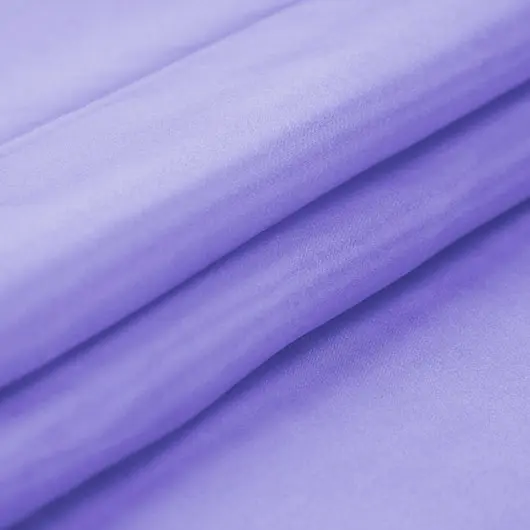
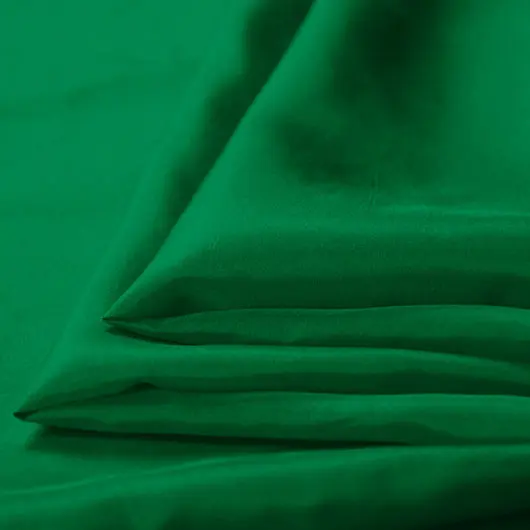
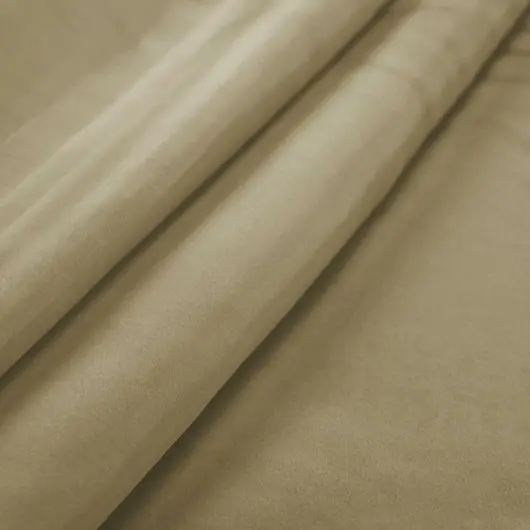
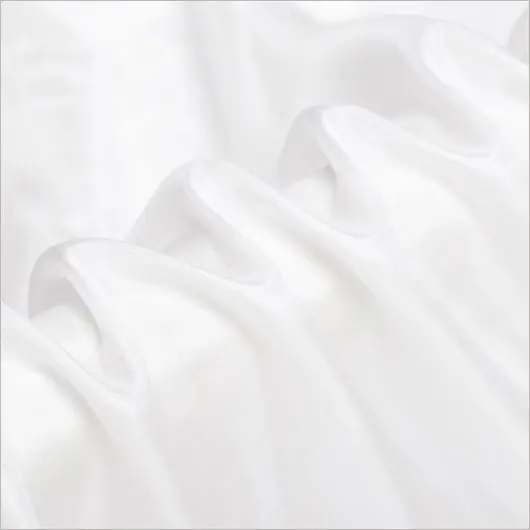
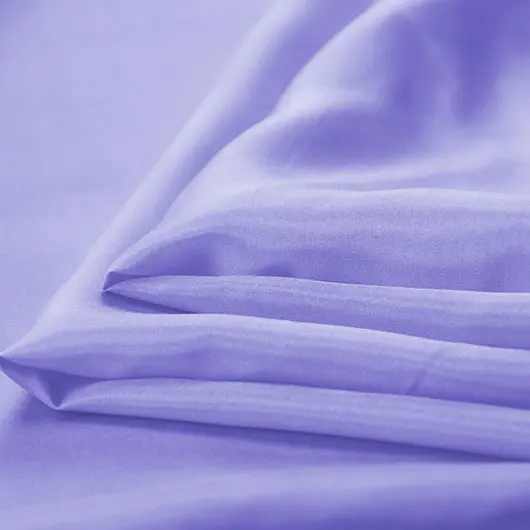
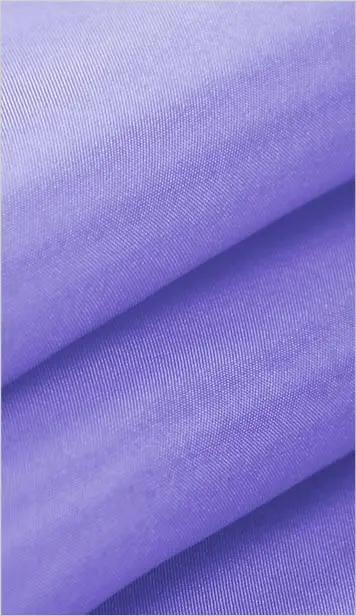
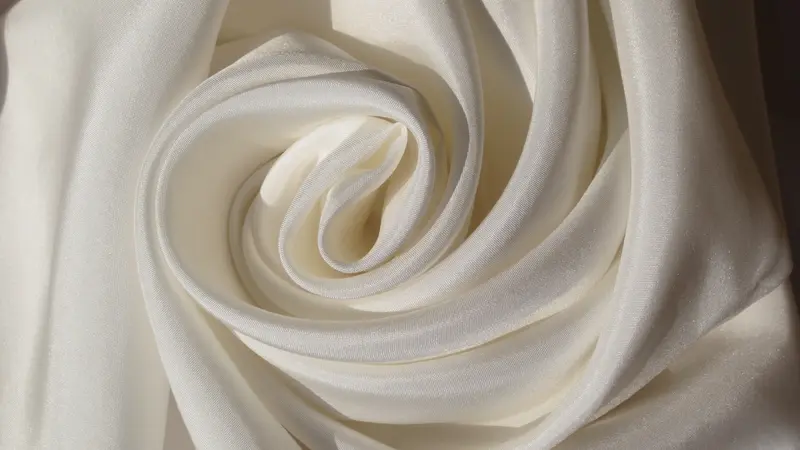
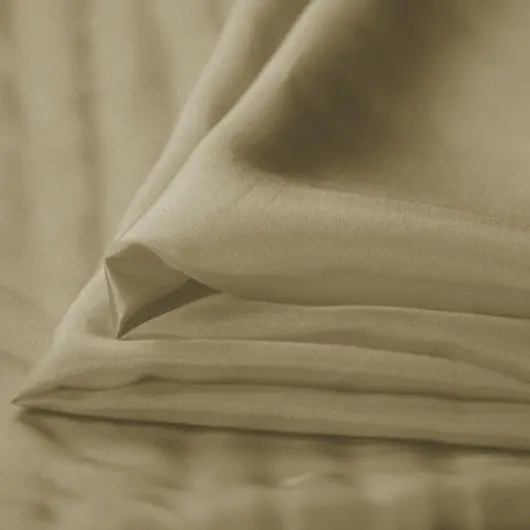
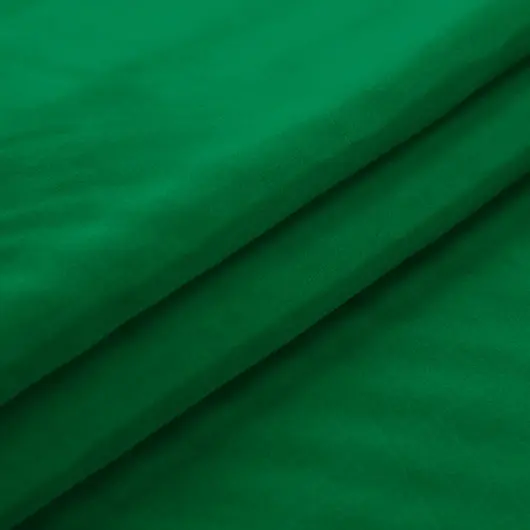
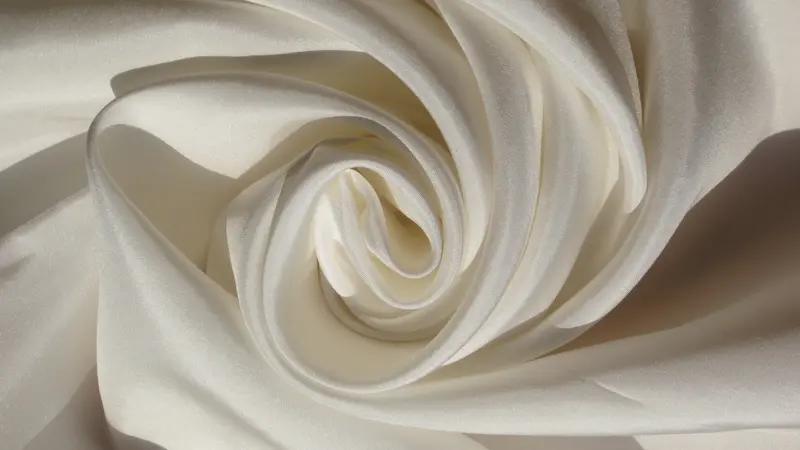
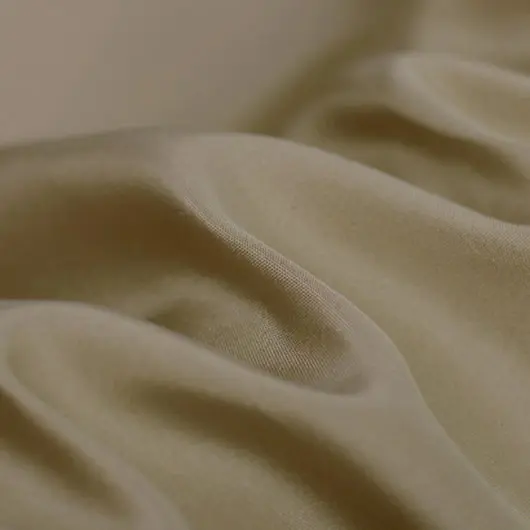
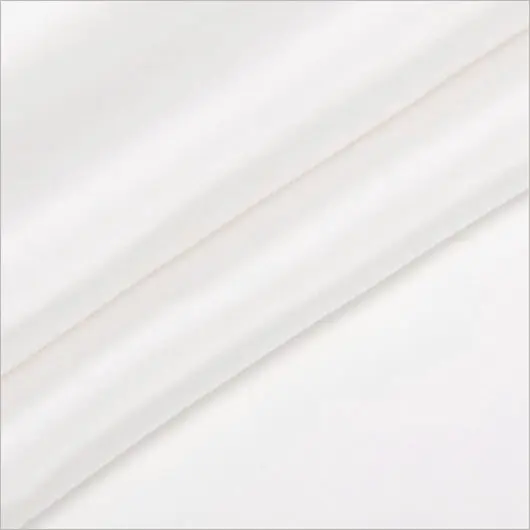
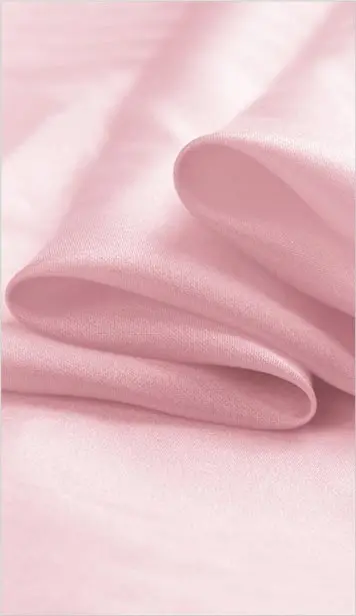
China silk: the plain, soft, affordable weave that most silk linings are made of.
Momme
5–16 mm
Weight
≈ 22–69 gsm
Width
114 / 140 cm
Availability
Ready stock
Habotai — sold in the trade as China silk — is a light, plain-weave mulberry silk with a soft, smooth hand and a low, gentle sheen. It is the least expensive way to put real silk against the body, and the standard lining cloth of the silk industry.
Its virtues are neutrality: it does not compete with the garment, it slides over other layers, it takes dye and print evenly, and it is light enough that a full lining adds almost no weight. Where it is weak is structure — habotai has no body, so it is a lining, a scarf, a flag or a print base rather than a garment shell.
At a glance
Soft, smooth plain weave with a low sheen — the classic lining silk
5–8 mm for linings and scarves, 12–16 mm for shirts and light dresses
Takes reactive dye and digital print exceptionally evenly
Inexpensive per metre because it uses little raw silk
How Silk Habotai is woven
Structure: Plain weave, low twist, medium sett
Interlacing diagram — warp ends vertical, weft picks horizontal. A dark cell is a point where the warp passes over the weft.
Habotai — historically 'China silk' — is the simplest silk structure there is: a plain weave in a low-twist, degummed yarn at a moderate density. Low twist means the yarn lies flat, so the surface is smooth and softly lustrous rather than pebbled.
Because the structure is balanced and the yarn is not stressed, habotai is the lightest way to get a continuous smooth silk surface. It is the standard lining and the standard base for hand-painted and resist-dyed work, and it takes dye very evenly.
Understanding the structure is the cheapest way to predict behaviour: the length of the float decides the lustre and the snag resistance, and the twist in the yarn decides how much the cloth creases. If you are choosing between two families, the weight chart and the fabric selector filter on both.
Weights we weave — and what each one is for
Momme fixes the price, the opacity and the drape. The table below is the range we actually quote for Silk Habotai. The exact weight and width are confirmed in writing on every quotation.
Momme
Approx. gsm
What it is for
Qualities
5 mm
≈ 22 gsm
Lining and scarf weight — light, slippery, almost weightless
5 mm Habotai
6 mm
≈ 26 gsm
Lining and scarf weight — light, slippery, almost weightless
5 mm Habotai
8 mm
≈ 34 gsm
The standard China silk: jacket and skirt linings, light scarves
12 mm Habotai, 5 mm Habotai, Broadcloth, Pongee
10 mm
≈ 43 gsm
The standard China silk: jacket and skirt linings, light scarves
12 mm Habotai, 5 mm Habotai, Pongee
12 mm
≈ 52 gsm
Shirting, light dresses, print base and flag weight
12 mm Habotai, 5 mm Habotai, Broadcloth, Pongee
16 mm
≈ 69 gsm
Shirting, light dresses, print base and flag weight
12 mm Habotai, 5 mm Habotai, Broadcloth
Not sure which weight you need? The momme chart converts every weight to gsm and matches each band to the garments it serves, and the selector filters the whole library by weight and application.
What Silk Habotai Fabric is used for
Typical applications in this family are jacket and skirt linings, scarves, light blouses, print and dye base cloth, flags and banners, costume linings. Each link opens the buying guide for that application, with the weight windows we recommend and the fabrics our clients actually order.
Pongee is a slightly heavier, more rustic plain weave often used for the same jobs. Habotai is smoother and lighter; pongee has more body and a duller hand.
Cutting and sewing this weight
Silk is not difficult to sew, but it punishes the wrong needle. The parameters below are the ones our clients converge on for this weight band; test on an offcut first, because a needle size that is fine for one finish will pick threads in another.
Parameter
What we recommend for 5–16 mm (≈ 22–69 gsm)
Machine needle
65/9 or 70/10
Stitch length
12–14 stitches per inch (2.0–2.5 mm)
Thread
Fine mercerised cotton, silk-finished polyester, or spun silk — matched to the shell so the seam does not pucker
Interlining / support
15–25 gsm weft-insertion or a silk organza self-facing
cold soak 10–15 minutes, or thorough steam; dry flat
Seam finish
French or hairline seam on anything sheer; overlocked and turned on opaque weights
Cut single layer. Silk shifts, and a folded lay gives you two panels that are not mirror images.
Pin inside the seam allowance only, with fine glass-head or silk pins — a pin hole through charmeuse or a satin face is permanent.
Use a fine, well-twisted thread. A thick thread in a fine needle leaves a visible channel and puckers the seam.
Mark the straight grain on every panel before you lift it off the table. On a bias-cut garment the grain line is the whole design.
French seams or hairline seams on anything sheer: a plain turned seam shows as a dark line through the cloth.
How much silk habotai to order
Planning quantities, from standard block patterns. Figures are for a plain layout with no pattern repeat to match.
Garment or item
At 114 cm width
At 140 cm width
Notes
Scarf 90 × 90 cm
1.0 m
1.0 m
Includes a narrow hand-rolled hem; allow more for a wide hem or a border print
Camisole or shell top
1.2 m
1.0 m
Bias cut; add 15% if the design is cut on the true bias
Blouse or shirt
2.0 m
1.6 m
Straight body, set-in sleeve; more for a gathered or oversized body
A-line skirt
1.5 m
1.2 m
Above-knee; a full circle skirt needs roughly double
Straight dress
2.8 m
2.2 m
Knee length, no train, bodice and skirt from one length
Bias slip dress
3.2 m
2.6 m
Bias layouts waste more; buy the length the pattern states, not the flat measure
Evening gown with train
5.5 m
4.5 m
Floor length; fitted bodice plus a trained skirt needs a second length to match
Standard pillowcase 50 × 70 cm
0.7 m
0.7 m
Envelope closure; pair two if the fabric has a directional nap
Curtain panel, 2× fullness
—
3.0 m per metre of drop
Rule of thumb: drop × 2 to 2.5 for pencil pleat, plus hem and heading allowance
These are planning figures from standard block patterns, not a cutting guarantee. They assume no pattern matching and no nap. Add 10–15% for a large repeat or a one-direction print, and add your shrinkage allowance before you order. If a program is costing on metres, send us the marker and we will quote against the actual consumption.
What to check before you cut
Every roll is inspected before dispatch, but cloth is a natural product and dye lots vary. These are the eight checks worth making at goods-in — they take two minutes and they are the difference between a claim and a write-off.
Check
How to do it
What is a problem
Shading, side-to-side and end-to-end
Lay the cloth folded end to end and across the width under daylight or a D65 lamp.
Any visible step between the centre and the selvedge, or between the start and the end of a roll.
Bowing and skewing
Square the cloth on a table and measure the diagonal, or check a printed repeat against the selvedge.
The weft running more than a few centimetres off square across the width — it distorts every panel cut from it.
Slubs, thick and thin places
Expected and structural in dupioni and shantung; check for consistency across panels.
A slub count that varies sharply between panels of the same garment.
Broken ends, floats, snagged yarns
Hold the cloth up to a light source and scan across the width.
Any broken filament on a satin face — it will run under tension.
Crease marks and chafe marks
Unroll flat and look across the surface at a low angle.
Permanent creases pressed into a finish, or abraded lines where the roll has rubbed in transit.
Soiling, oil and water marks
Scan both sides; some marks only show on the reverse.
Any spot. Silk stains cannot be safely spot-cleaned before dyeing.
Width short against the ticket
Measure the usable width between the selvedges, excluding the pin-holes.
Less usable width than the quotation states — markers are often drawn tight.
Hand and finish against the approved sample
Compare to the bulk sample you signed off, in the same lighting.
A softer or firmer hand, or a difference in lustre. Finishing drifts between dye lots.
Every roll we ship is inspected before it leaves, and any piece with a defect is cut short and the metrage credited rather than passed on. Even so, check the cloth before it goes under the knife: once a piece is cut it is accepted. Report anything within seven days of delivery with the roll number.
Ordering: minimums, colours and finishing
Stock colours are available from 1 metre, which makes sampling practical. Custom dyeing starts at 40 metres per colour with a lab dip approved before bulk; digital printing starts at 40 metres per design after a strike-off. Widths are 114 / 140 cm, and the momme tolerance is stated on the quotation rather than assumed.
For a production program, approve a one-metre cut in the bulk colour before the roll is dyed — screen colour and cloth colour are not the same thing, and silk habotai fabric is a family where a shade difference shows across a seam.
Care and handling
Hand wash cold with a pH-neutral silk detergent, or dry clean. Do not soak or wring; roll in a towel and dry flat away from direct sun. Press on the reverse with a cool iron through a cloth. Expect 3–5% shrinkage on the first wash, so pre-shrink before cutting a production run.
Frequently asked questions
What is silk habotai?
Habotai, or China silk, is a light plain-weave 100% mulberry silk with a soft hand and a low sheen. It is commonly woven between 5 and 16 momme and is the standard lining and scarf silk.
Is habotai the same as China silk?
Yes — "China silk" is the trade name for habotai. Both refer to the same lightweight plain-weave mulberry silk; neither implies a lower grade of fibre.
What is the best habotai weight for lining?
8–10 mm for jacket and skirt linings, 5–6 mm for lightweight dresses and scarves. 12 mm and above is better used as a garment cloth or print base, since a heavy lining defeats the purpose.
Can habotai be dyed at home?
Yes. Habotai takes acid dyes and silk-reactive dyes very well, and its smooth surface shows colour evenly. Pre-wash to remove sizing, and expect roughly 3–5% shrinkage on the first wash.
How do I know this is real mulberry silk and not polyester satin?
Ask for a burn test on a cutting: mulberry silk burns slowly, smells like burning hair, and leaves a brittle black bead that crushes to powder. Polyester melts, smells sweet-acrid and leaves a hard bead. We supply 100% mulberry silk and state the composition on every quotation; if you need formal confirmation we can arrange third-party fibre analysis on the bulk.
What width do the rolls come in, and can I get a wider one?
Standard widths are 114 cm and 140 cm, and the usable width excludes the selvedge. Wider widths are woven to order on a minimum quantity. If a marker needs a specific width, tell us before quoting — the price is calculated on the width as well as the weight.
How much shrinkage should I allow?
Silk typically relaxes 3–8% on the first wet treatment, more on washed finishes and less on a fabric that has already been sand-washed. The safe approach is to pre-shrink a full length before cutting a production run, or to have the piece steam-shrunk. Do not guess: the allowance belongs in the marker, not in the pattern.
Can you match a colour I send you?
Yes. Send a physical swatch or a Pantone reference and we dye a lab dip for approval before bulk. Custom colours start at 40 metres per colour. Screen and monitor colours are not a reliable reference — a photograph of a fabric is two colour conversions away from the cloth.
What is the lead time?
Stock colours dispatch in a few working days. Dyed-to-order runs need the lab dip approved first, then dyeing and finishing; printed runs need a strike-off approved before bulk. The quotation carries the confirmed date for your quantity, and we would rather quote a longer date and meet it.
Do you ship samples, and can I order just one metre?
Yes. Stock colours are available from one metre so you can test drape, dye uptake and washing before committing. We post swatch cards worldwide; tell us which families you are comparing and we will send the relevant colours.
PHOTOGRAPHED FROM OUR STOCK
Silk Habotai — the cloth, as it is
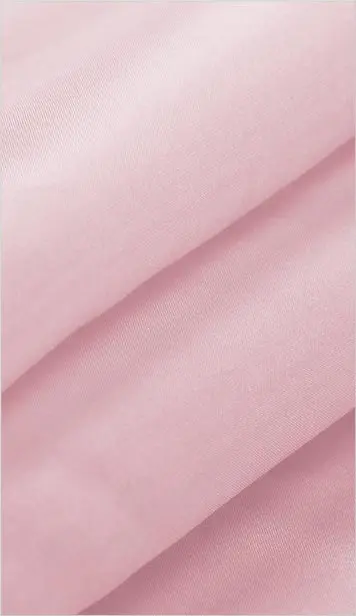
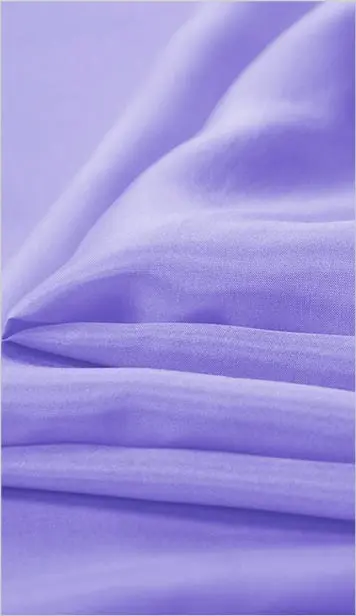
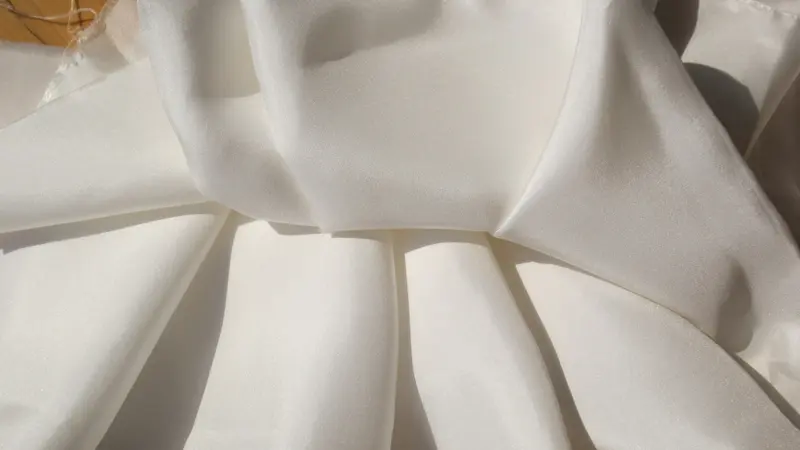
Unretouched photographs of rolls and cut lengths from our own floor. Colour varies between dye lots; the swatch card is the only reliable reference.